R How Or To In
Logical Operators In R Rbloggers
Since r is facts platform, it has a as an alternative whole set of mathematics operators, so that you can use r as a flowery calculator if the want arises. a way to use basic operators in r maximum of the fundamental arithmetic operators are very acquainted to programmers (and everybody else who studied math in faculty). operator description Operators. r's binary and logical operators will look very familiar to programmers. observe that binary operators paintings on vectors and matrices in addition to scalars.
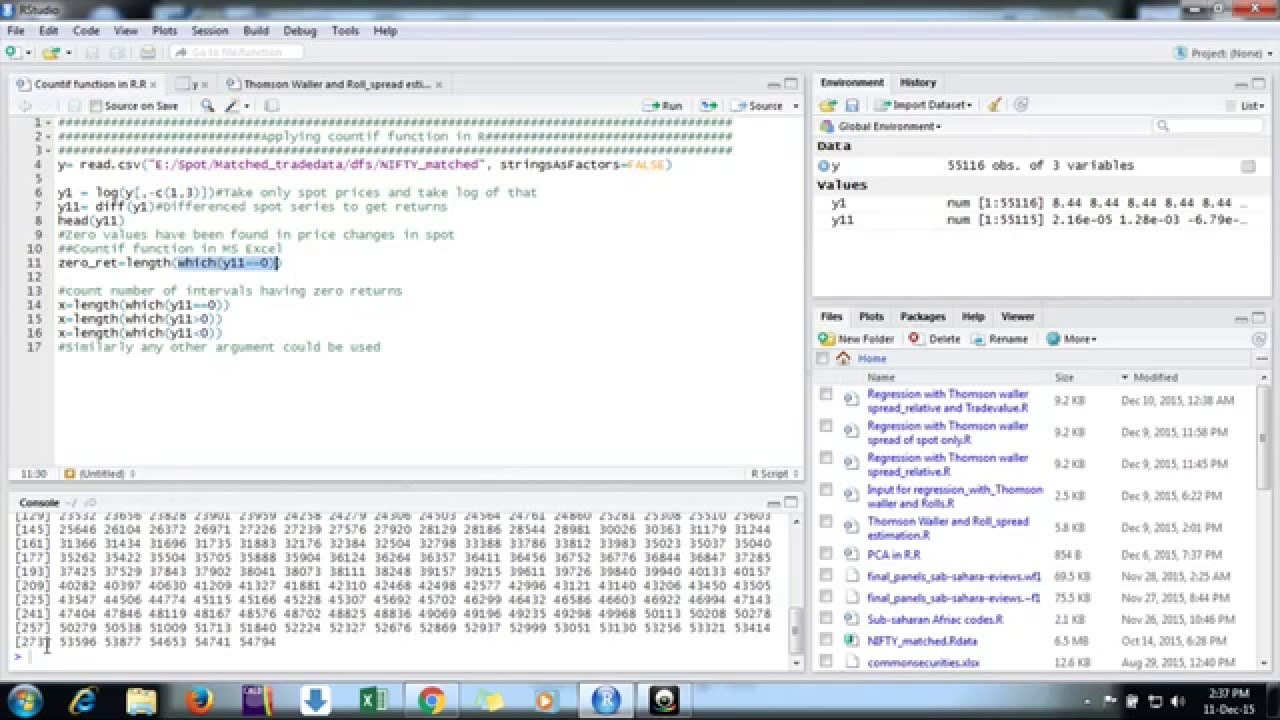
In earlier r variations, istrue Andrie de vries is a leading r professional and business offerings director for revolution analytics. with over 20 years of experience, he offers consulting and education offerings within the use of r. joris meys is a statistician, r programmer and r lecturer with the college of bio-engineering on the college of ghent. Linear regression. it’s a technique that almost each statistics scientist wishes to understand. even though device learning and synthetic intelligence have advanced lots more state-of-the-art techniques, linear regression remains a attempted-and-proper staple of data technological know-how.. on this blog put up, i’ll show you the way to do linear regression in r. In earlier r variations, istrue There is r how or to in an less difficult manner to use if…else assertion mainly for vectors in r programming. you can use ifelse feature as an alternative; the vector equivalent form of the if…else assertion. test out these associated examples:. Take enter and print in r the There are four varieties of the extract operator in r: [, r how or to in [[, $, and @. the fourth form is likewise referred to as the slot operator, and is used to extract content material from objects built with the s4 item device, additionally known as a formally defined object in r. maximum starting r customers do not work with officially defined items, so we may not talk the slot operator right here. In r, the replicate feature makes this very simple. the first argument to duplicate is the variety of samples you want, and the second one argument is an expression (now not a characteristic call or definition! ) that will generate one of the samples you need. %in% operator in r, is used to discover if an detail belongs to a vector. example of %in% operator in r and instance of %in% operator in r for data frame. A categorical variable v1 in a statistics body d1 may have values represented through the letters from a to z. i want to create a subset d2, which excludes a few values, say, b, n and t. basically, i need a c. R-bloggers. com gives each day e-mail updates approximately r information and tutorials about mastering r and many different topics. click here if you're looking to submit or find an r/information-technological know-how activity. want to proportion your content material on r-bloggers? click here when you have a blog, or right here if you do not. Within the r-task. org documentation, tilde ~ begins getting mentioned in bankruptcy 11 whilst the dialogue of “statistical models” begins. so right away, one should glean that the ~ is used when seeking to specific a statistical version. A way to import statistics into r: 3 easy ways to get your records into r december 7, 2015 import. io study in case you haven’t heard of r before, you need to recognise that it’s one of the most famous statistical programming languages within the world, utilized by hundreds of thousands of humans. It labored! we're going to cover precisely what's occurring right here in more detail, but first let's briefly r how or to in evaluate how r works with logical and relational operators, and how we are able to use the ones to correctly filter in r. a quick aside on logical and relational operators in r and dplyr. in dplyr, clear out takes in 2 arguments: the dataframe you're operating on. See? "&": the unmarried model does elementwise comparisons (for whilst you are doing logical operations on vectors of the same period, e. g. if to your instance x<-c(1. five,three. 5). the alternative one works similar to c++'s or java's &&: it simplest seems at the first element of each vector (that is commonly an unexpected drawback), however in a usually higher acting way: it appears from left to right, and as. R operators an operator is a symbol that tells the compiler to perform particular mathematical or logical manipulations. r language is wealthy in integrated operators and presents. R assist on the net. there are net seek web sites that are specialised for r searches, inclusive of search. r-mission. org (that's the web site utilized by rsitesearch) and rseek. org. it is also viable to use a popular seek website online like google, via qualifying the search with “r” or the call of an r package (or both). it could be particularly. R operators an operator is a symbol that tells the compiler to carry out particular mathematical or logical manipulations. r language is rich in integrated operators and gives. On this educational we can have a observe how you could write a primary for loop in r. it's miles aimed toward beginners, and if you’re now not yet acquainted with the fundamental syntax of the r language we advise you to first have a study this r how or to in introductory r educational.. conceptually, a loop is a way to copy a chain of commands beneath positive conditions. Operators. r's binary and logical operators will look very acquainted to programmers. be aware that binary operators work on vectors and matrices as well as scalars. R has several operators to perform tasks including arithmetic, logical and bitwise operations. in this article, you will learn about different r operators with the help of examples. Which function in r which which function in r, returns the indices of the logical object when it is true. in other words, which function in r returns the position of value when it satisfies the specified condition. syntax of which function in r: which(x, arr. ind = false). R does this by default, but you have an extra argument to the data. frame function that can avoid this — namely, the argument stringsasfactors. in the employ. data example, you can prevent the transformation to a factor of the employee variable by using the following code: > rent. statistics In r how or to in r, the operators “indicate the logical operations or and and. as an example, to check if x equals 1 and y equals 2 we do the following: > x = 1; y = 2. > (x == 1) & (y == 2) [1] genuine. however, if you are used to programming in c you may be tempted to write down. Matrices are the r objects in which the factors are arranged in a two-dimensional square format. they contain elements of the same atomic kinds. although we can create a matrix containing simplest characters or handiest logical values, they're now not of plenty use. What's r list? r listing is the item which incorporates factors of various kinds like strings, numbers, vectors and another listing inside it. r listing also can contain a matrix or a feature as its factors.In Operator In R Datascience Made Simple
A Way To Do Linear Regression In R Sharp Sight


Komentar
Posting Komentar